

Ride to Everest Base Camp:
The Ultimate Motorcycle Journey in Tibet
Why Everest Continues to Capture the Human Imagination
Long before commercial flights, satellite navigation and social media, explorers, mountaineers and adventurers looked toward the Himalaya and wondered what lay beyond the horizon. For decades, Everest remained one of the great unsolved challenges of human exploration, until Sir Edmund Hillary and Tenzing Norgay finally reached the summit in 1953.
Since then, countless books, films and expedition stories have kept the fascination alive. Everest has been climbed, photographed and documented from almost every angle. And yet one question remains surprisingly powerful:
How many people have truly stood before the highest mountain on Earth and felt its scale with their own eyes?
Today, reaching the vicinity of Mount Everest is no longer reserved exclusively for elite mountaineers and major expeditions. On the Nepalese side, trekkers spend days hiking through the Khumbu Valley toward Everest Base Camp. Helicopters offer aerial views of the mountain in a matter of hours. From the Tibetan side, modern roads now make it possible to approach Everest by vehicle across the vast Tibetan Plateau. Yet convenience and adventure are not necessarily the same thing.
There is a profound difference between simply arriving at a destination and experiencing the journey that leads there.
That is precisely why approaching Everest by motorcycle feels so special. Because on a motorcycle, the journey itself becomes part of the destination.
Why a Motorcycle Changes Everything
A motorcycle has a unique way of connecting riders to the world around them.
Inside a car, the landscape remains behind glass. Temperatures, wind and weather are filtered away. Distances feel shorter, and the environment often becomes something observed rather than experienced. On a motorcycle, there is no such separation. The thin air of the Tibetan Plateau, the warmth of the afternoon sun, the sudden chill of a high mountain pass and the scent of juniper smoke drifting from a distant monastery all become part of the ride itself.
Every change in altitude is felt. Every shift in temperature becomes noticeable. Every kilometre travelled creates a stronger connection with the landscape. This is especially true in Tibet. Few places on Earth offer such a powerful combination of vast open spaces, high-altitude roads, ancient culture and dramatic Himalayan scenery. The scale of the Tibetan Plateau is difficult to appreciate until experienced firsthand. Roads disappear toward distant horizons. Snow-covered peaks rise above endless valleys. Nomadic families move across grasslands much as they have for centuries.
And unlike many adventure destinations that reveal their highlights immediately, Tibet builds anticipation slowly.
Day by day. Pass by pass. Kilometre by kilometre.
The Anticipation of Everest
One of the most remarkable aspects of riding to Everest Base Camp is that the mountain does not reveal itself immediately. For days, riders travel through the landscapes of Tibet knowing that somewhere ahead lies the highest mountain on Earth. The conversations at breakfast begin to revolve around Everest. During fuel stops, somebody inevitably asks how far away it still is. At dinner, route maps are studied and weather forecasts checked. The anticipation becomes part of the experience itself.
Meanwhile, the Himalaya gradually begin to rise higher along the horizon. The air grows thinner. The views become larger. On exceptionally clear days, it feels as though it is possible to see forever across the Tibetan Plateau.
And with every kilometre travelled westward, the excitement quietly grows.
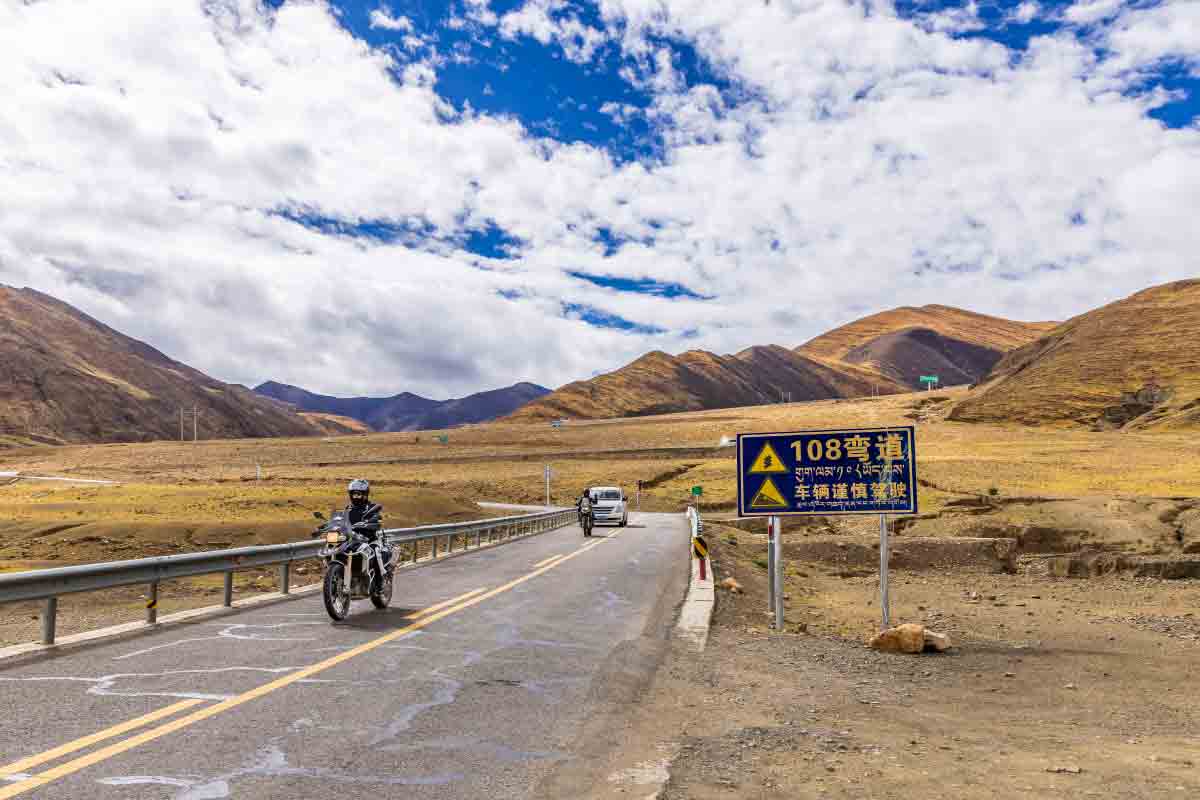
The Legendary Road of 108 Curves
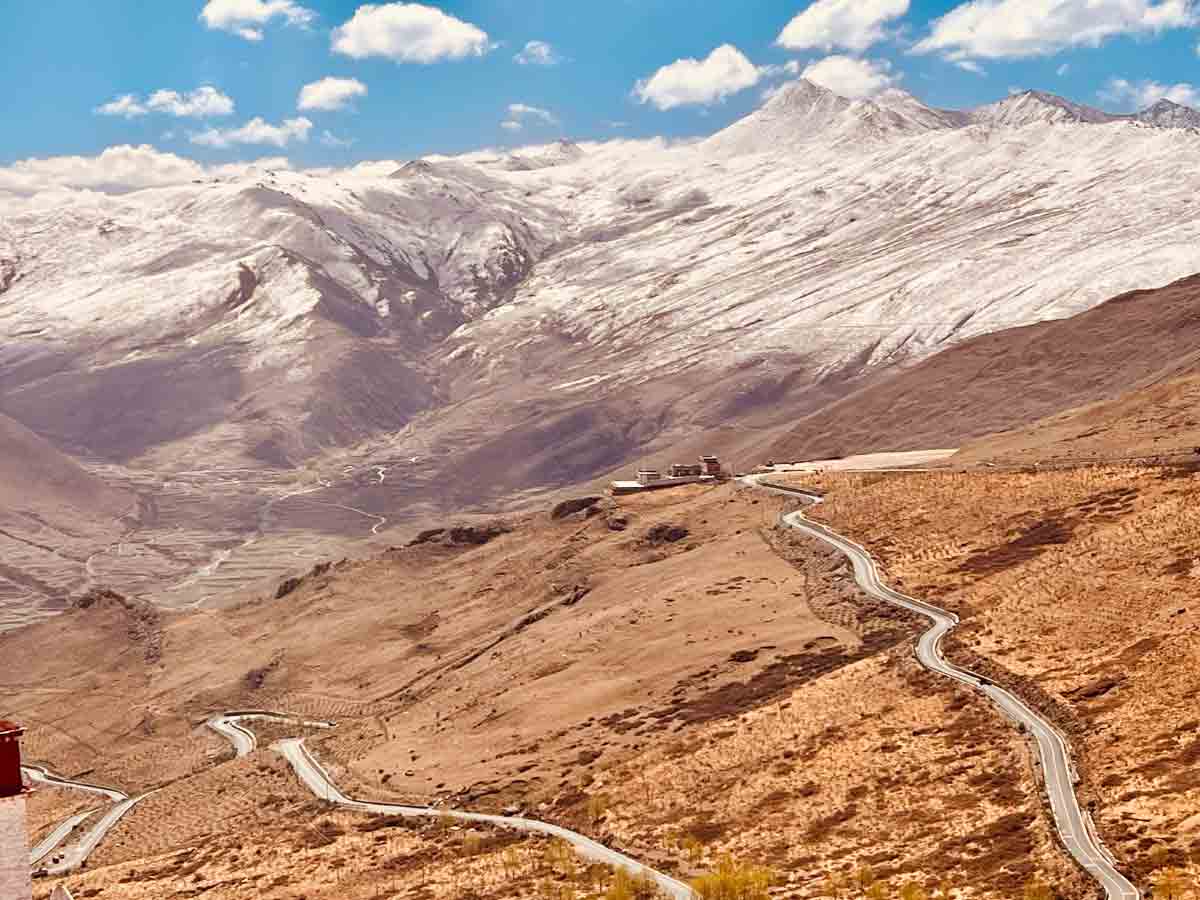
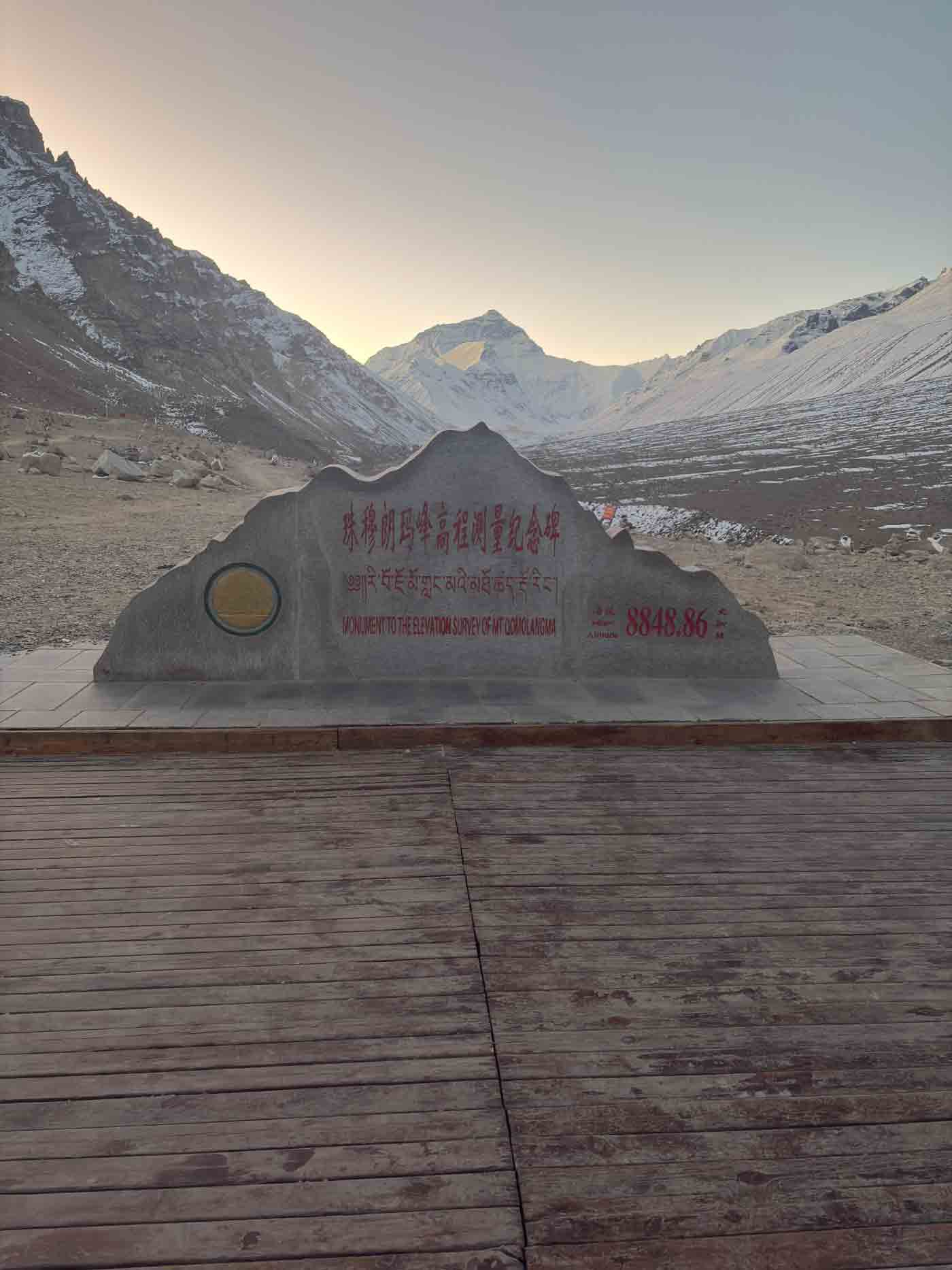
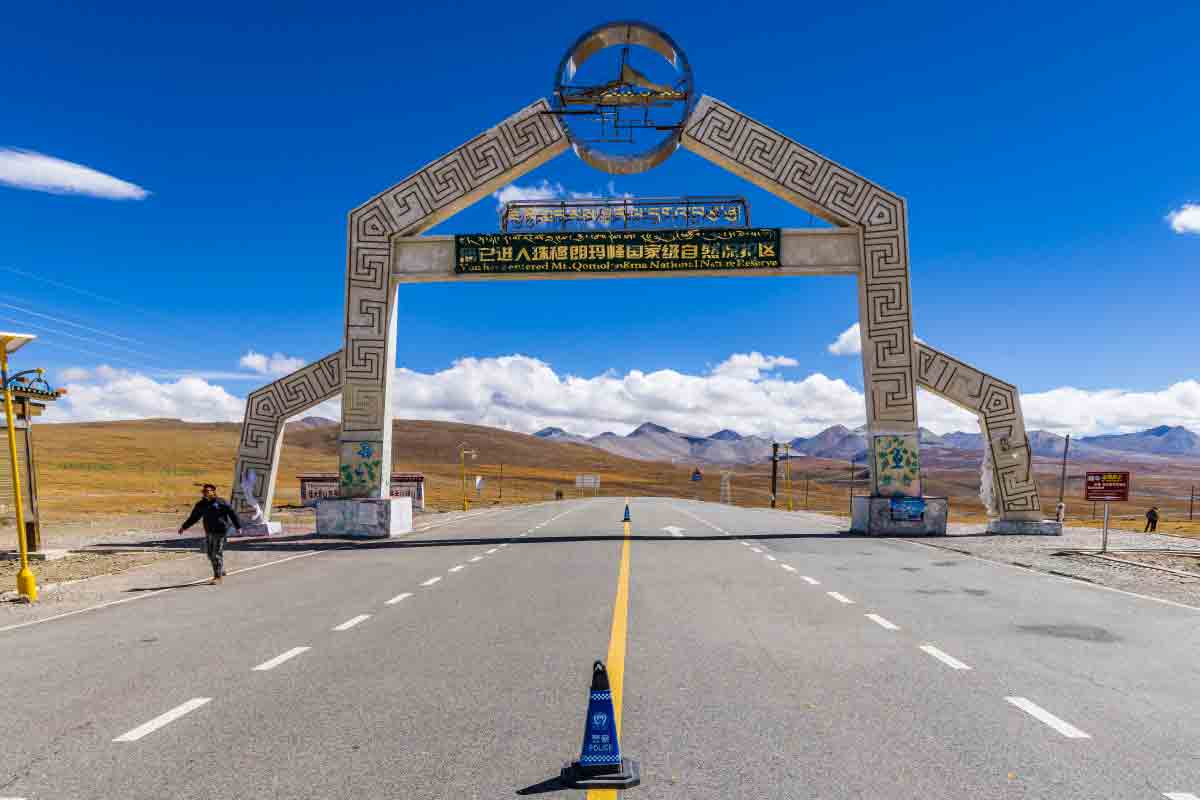
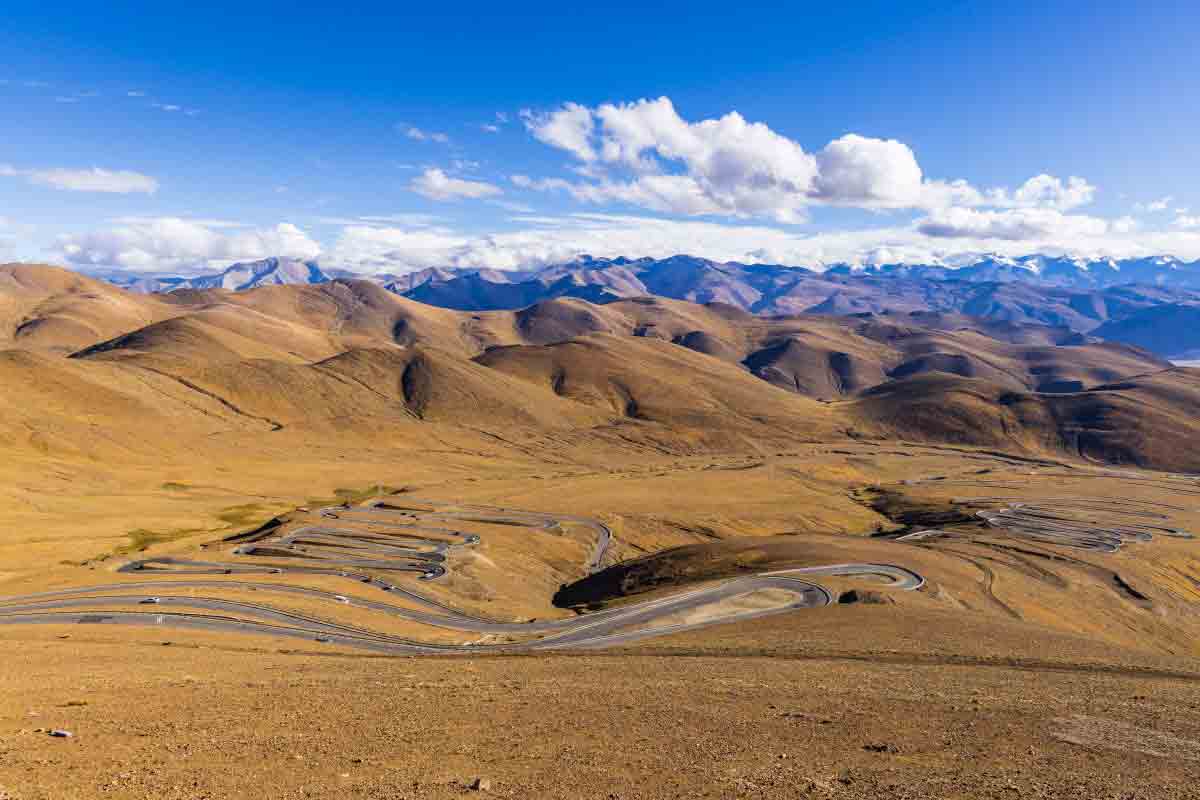
Eventually, the route reaches one of the most iconic viewpoints anywhere in Tibet.At 5,269 metres above sea level, Qomolangma Pass marks the gateway to the Everest region and offers one of the most spectacular panoramas in the entire Himalaya.Most riders stop here instinctively. Not because anybody tells them to. The view simply demands it.Within seconds, helmets come off, cameras appear and people walk towards the edge of the viewpoint to take in the panorama. And then comes a small surprise.
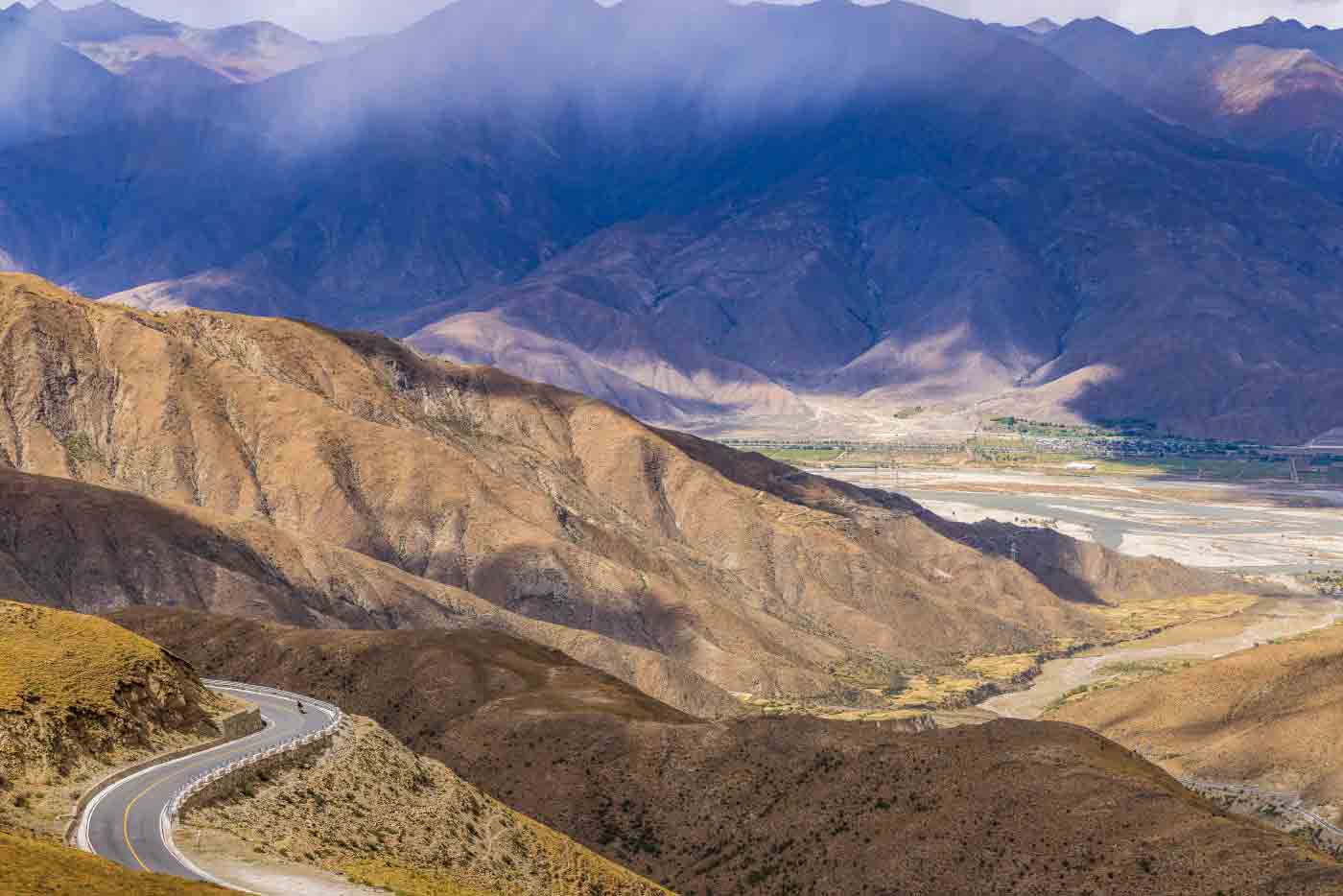
After only a few steps, many riders suddenly notice just how thin the air has become. At 5,269 metres above sea level, even a short walk can leave visitors unexpectedly short of breath. It is one of those moments that reminds you that this is not just another mountain road, but the Tibetan Plateau at well over five thousand metres. Above stretches an impossibly deep blue Tibetan sky. Prayer flags flutter in the wind while far below, the legendary road of 108 curves twists its way down the mountainside in an endless series of switchbacks.
From this vantage point, the road resembles a giant snake winding across the barren landscape towards Everest Base Camp.
For motorcyclists, it is one of those rare moments where the ride itself becomes just as memorable as the destination.
Yet it is not only the road that captures attention. Slowly, the skyline begins to reveal one of the greatest mountain panoramas on Earth.
Mount Everest dominates the horizon at 8,848 metres, but it is far from the only giant rising above the Himalaya. Nearby stand Cho Oyu (8,188 m), Lhotse (8,516 m) and Shishapangma (8,027 m), while countless additional 7,000- and 8,000-metre peaks stretch across the horizon in every direction. Few places on Earth offer such a concentration of the world’s highest mountains.
Standing on Qomolangma Pass, surrounded by sky, wind and mountains, it becomes easy to understand why travellers, climbers and explorers have been drawn to this region for generations. Every stop reveals another perspective. Every glance towards the horizon seems to uncover yet another distant summit.
And somewhere beyond the curves below lies one of the great goals of motorcycle travel in Tibet: Everest Base Camp itself.
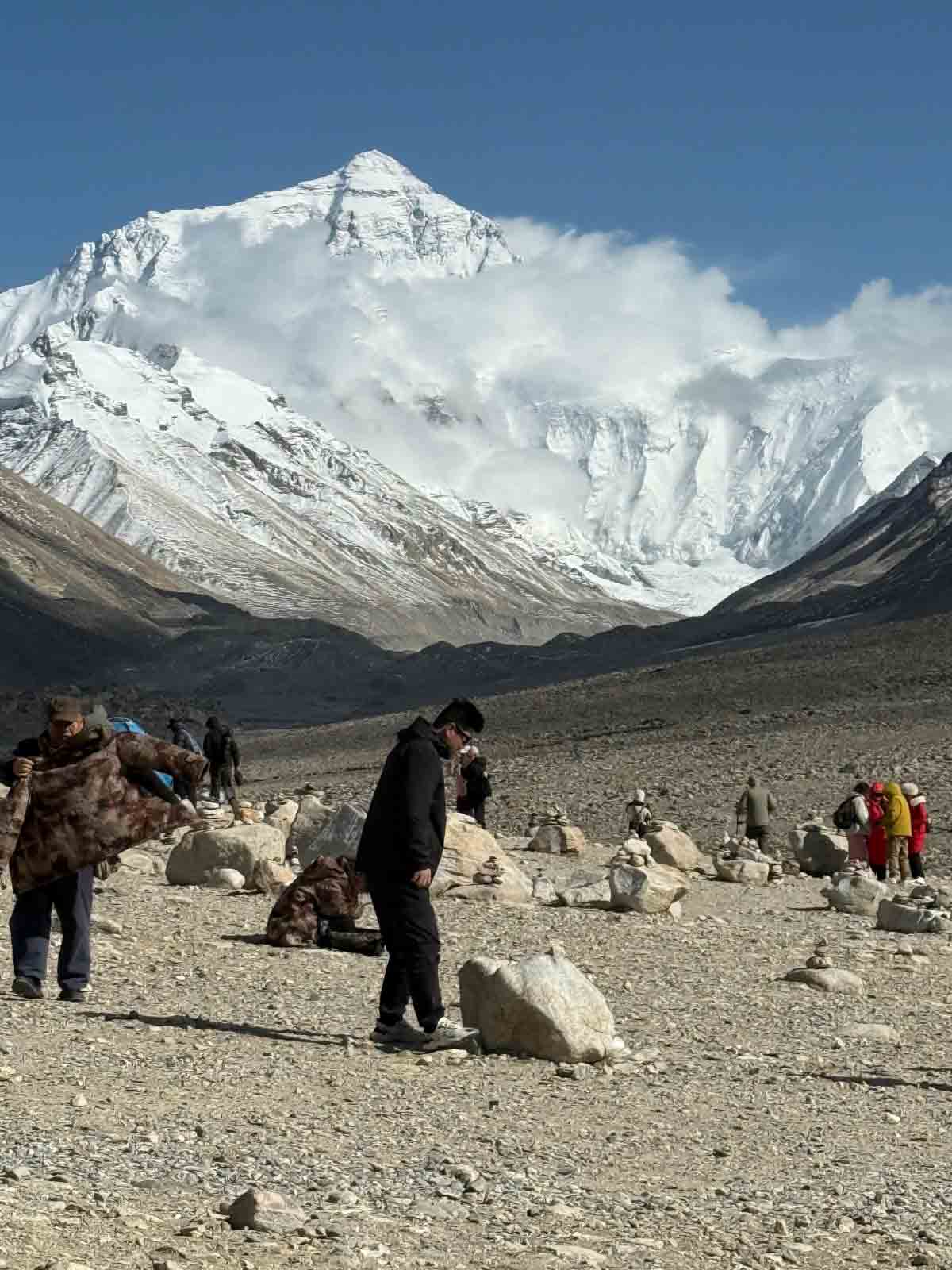
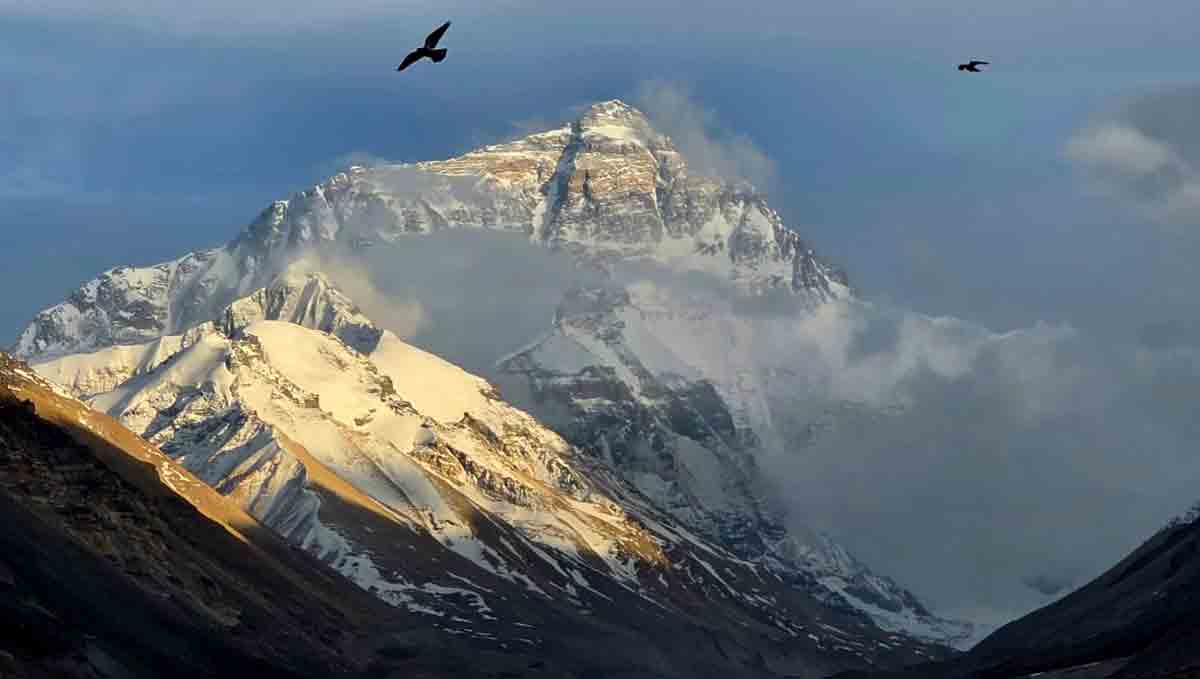
Rongbuk Monastery and the North Face of Everest
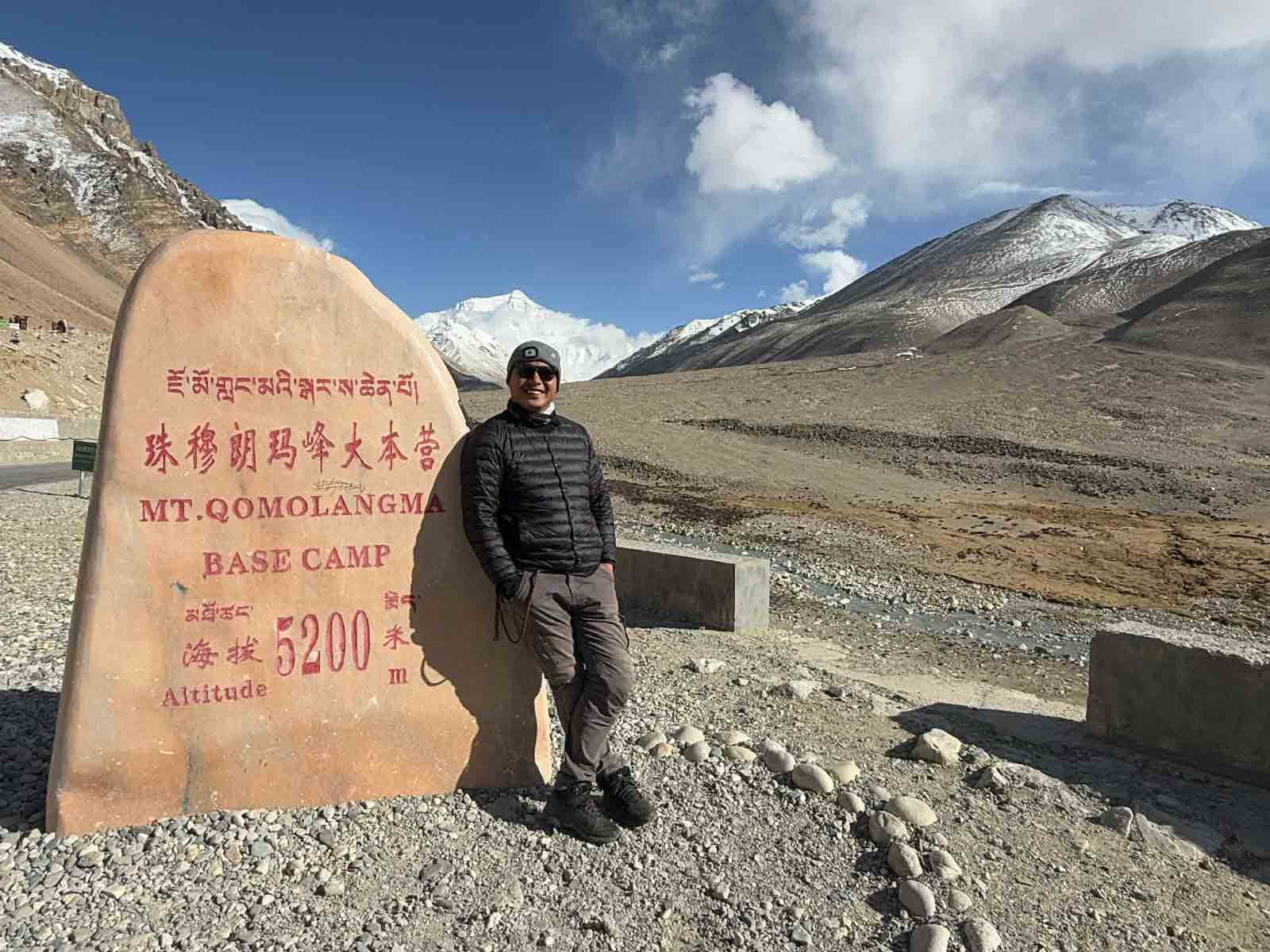
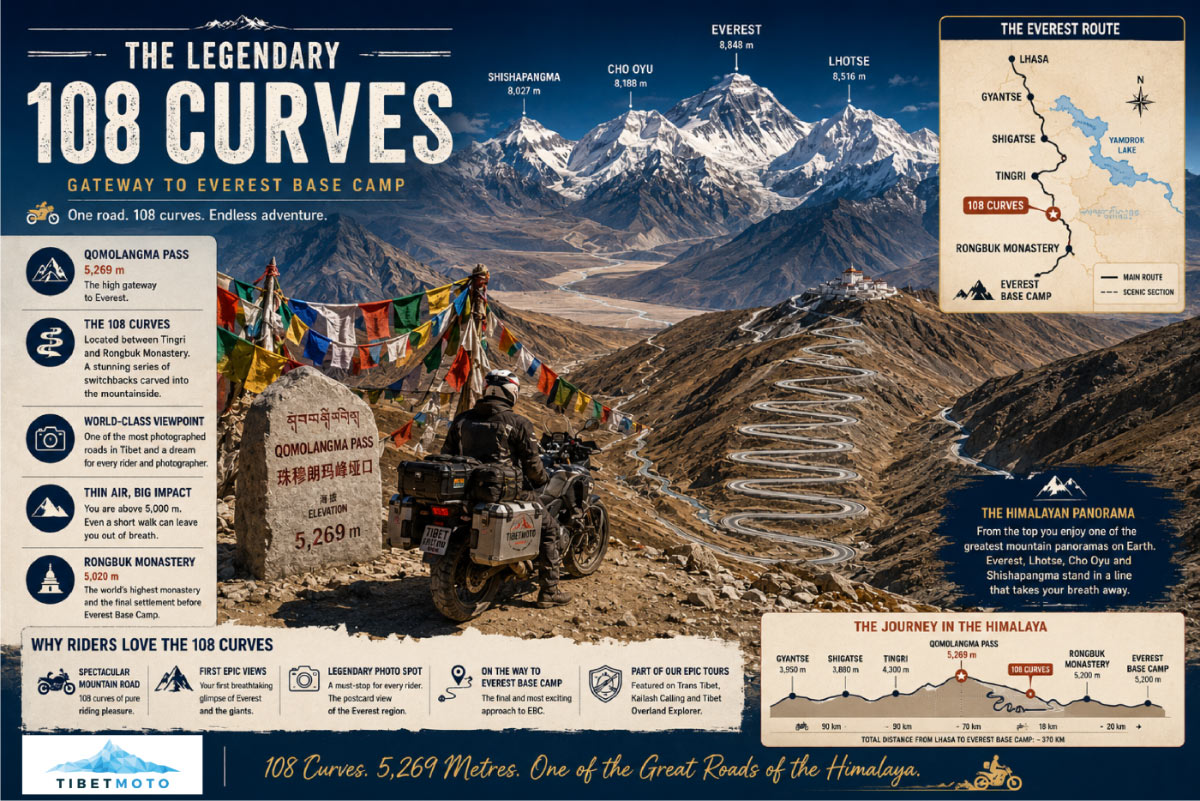
Eventually, the road reaches the final settlement before Everest Base Camp. This is where the motorcycles remain behind. To protect the fragile high-altitude environment surrounding Mount Everest, private vehicles are no longer permitted to continue all the way to Rongbuk Monastery and the Everest Base Camp area. The final section is completed by local shuttle transport.
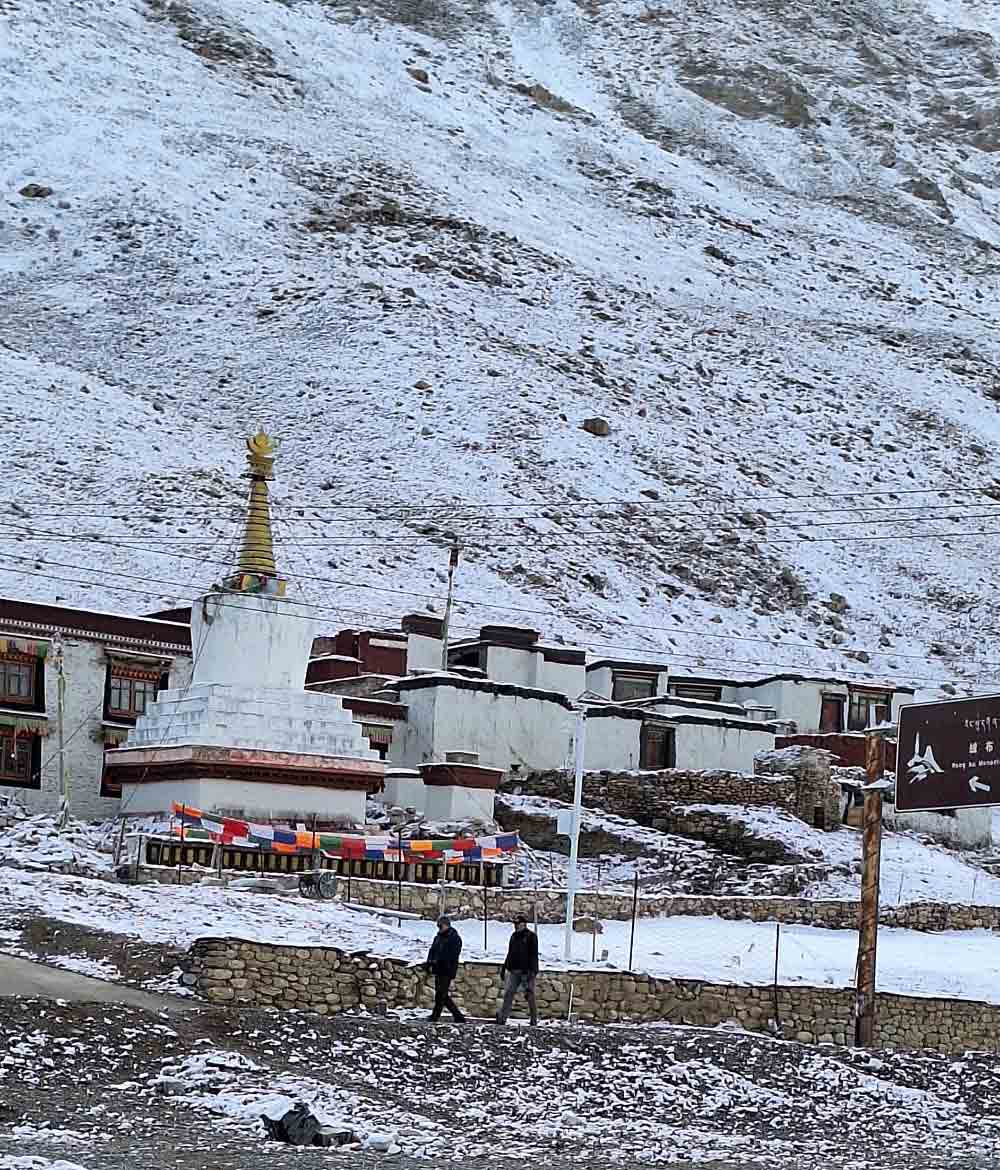
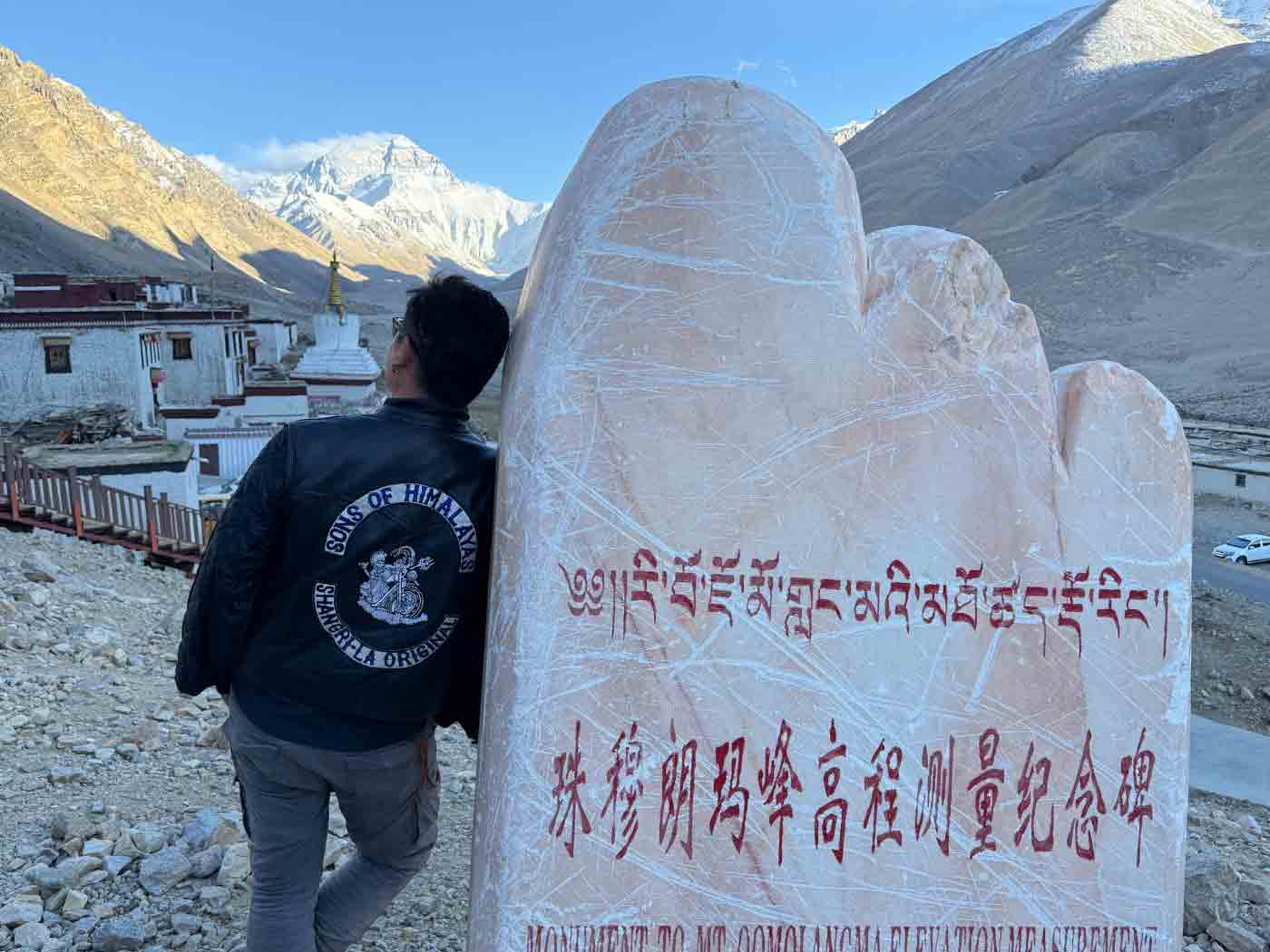
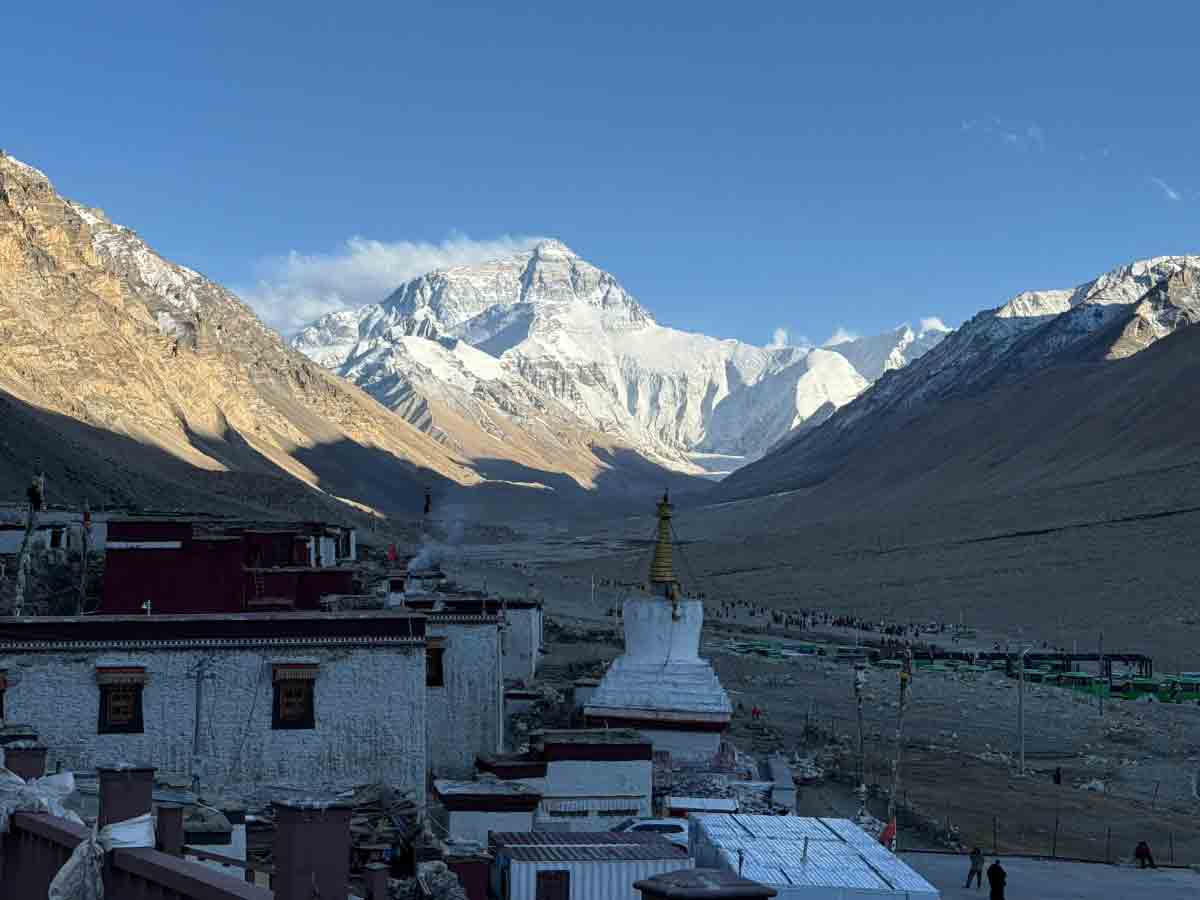
In practice, however, this changes very little. The views of Everest remain extraordinary, and the experience of standing beneath the north face of the world’s highest mountain loses none of its impact. Just below Everest lies Rongbuk Monastery, often described as the highest monastery in the world. For centuries, monks, pilgrims and travellers have visited this remote monastery beneath the shadow of Everest. Even today, many climbing expeditions stop here to receive blessings and pray for good fortune before venturing further into the mountains.
The atmosphere is unlike anywhere else in the Himalaya.
Ancient Buddhist traditions continue largely unchanged while the north face of Everest towers above the valley in almost unbelievable scale. For many riders, this becomes the defining moment of the entire journey.
Dinner With a View of Everest
As evening approaches, another unforgettable experience awaits. Inside the restaurant near Rongbuk, large panoramic windows look directly toward Everest. Outside, temperatures begin to fall rapidly as the Himalayan evening settles across the plateau.
Inside, riders gather over hot food and warm drinks while watching the last sunlight illuminate the summit. Gold slowly turns to orange. Orange fades into pink. And eventually the mountain disappears into the deep blue of approaching night.
There are few restaurants anywhere in the world where dinner is served with a view of Mount Everest.
Nightfall on the Roof of the World
Once darkness arrives, the temperature drops quickly. The wind becomes colder. The plateau falls silent. And above Everest, the stars begin to appear. Far from major cities and artificial light, the night sky over Rongbuk is often extraordinary. On clear evenings, the Milky Way stretches across the sky with remarkable clarity.
For many riders, this becomes one of the most memorable moments of the entire experience.
Not the riding. Not the photographs. Not even Everest itself. But standing beneath the highest mountain on Earth, surrounded by silence, looking upward into one of the clearest night skies they have ever seen. It is a moment that tends to stay with people long after the journey home.
Which TibetMoto Tour Includes the Ride to Everest Base Camp?
For riders dreaming of reaching Everest Base Camp by motorcycle, TibetMoto offers several different journeys depending on available time and riding ambitions.
- The Trans Tibet Motorcycle Tour is our most popular option and the ideal introduction to motorcycle travel across Tibet, combining Everest Base Camp with many of the region’s most famous highlights in just 12 days.
- For riders seeking a deeper exploration of Western Tibet, our Kailash Calling Motorcycle Tour continues beyond Everest toward Lake Manasarovar, Mount Kailash and the lost Kingdom of Guge.
- For those looking for a longer Himalayan adventure, the Go East Young Man Himalayan Tour offers yet another route toward Everest through some of the most spectacular landscapes of Eastern Tibet starting from Shangri-La in Yunnan Province.
Whichever route you choose, the reward remains the same: one of the most extraordinary motorcycle journeys on Earth and the opportunity to stand in the shadow of Mount Everest itself.
Frequently Asked Questions About Riding to Everest Base Camp
TibetMoto offers a range of motorcycles for riders joining an Everest Base Camp motorcycle tour. Popular choices include the CFMOTO 450MT, CFMOTO 800MT and the new 800MT-X for adventure riders. Riders preferring a lower seat height can choose motorcycles such as the CFMOTO 450CLC cruiser or BMW G310GS. Larger motorcycles, including the BMW F800GS, are also available. All motorcycles are equipped with heated grips and luggage solutions suitable for high-altitude travel in Tibet.
The ride to Everest Base Camp is considered achievable for most riders with previous road riding experience. Road conditions on the main routes are generally good, although riders should be prepared for high altitude, changing weather conditions and occasional mountain roads. The biggest challenge is usually the altitude rather than the riding itself.
Proper acclimatisation is an essential part of every TibetMoto Everest Base Camp tour. Riders spend several days in Lhasa (3,650 m) before travelling into higher regions of Tibet. The itinerary is designed to increase altitude gradually, allowing most participants to adjust comfortably before reaching Everest Base Camp and the surrounding Himalayan passes.
Some travellers also discuss Acetazolamide (formerly sold under the brand name Diamox) with their doctor before travelling. This prescription medication may support acclimatisation at high altitude but is not suitable for everyone and should only be taken following medical advice.
For most riders, gradual altitude gain, proper hydration and adequate rest remain the most important factors for a successful journey on the Tibetan Plateau.
The best seasons for an Everest Base Camp motorcycle tour are generally April to June and September to October. During these periods, temperatures are usually comfortable, skies are often exceptionally clear and views of Mount Everest and the Himalaya can be spectacular.
Yes. In fact, many riders consider the Tibetan side to offer some of the most impressive views of Mount Everest anywhere in the Himalaya. The north face of Everest rises directly above Rongbuk Monastery and the Everest Base Camp region, creating a dramatic and unobstructed mountain panorama.
The Everest Base Camp area on the Tibetan side lies at approximately 5,000 metres above sea level. Several mountain passes along the route exceed this altitude, making proper acclimatisation an important part of any motorcycle journey across Tibet.
While the Nepal side is famous for trekking, the Tibetan side allows riders to approach Everest by motorcycle through vast Himalayan landscapes and across the Tibetan Plateau. The combination of high-altitude roads, Tibetan culture, Rongbuk Monastery and panoramic Everest views makes it one of the world’s most unique motorcycle adventures.
Everest Base Camp is included in several TibetMoto journeys, including the Trans Tibet Motorcycle Tour, the Kailash Calling Motorcycle Tour and selected longer Tibet and Himalayan expeditions. Each route offers a different combination of riding days, cultural experiences and destinations across Tibet.