

Kailash Calling –
A Tibet Motorcycle Tour to Mount Kailash, Everest Base Camp and Guge
By Hendrik Heyne, Managing Owner of TibetMoto Tours
I first boarded the Tibet train in 2007, just one year after the railway had finally connected Lhasa with the rest of China.
At the time, the entire project was still attracting worldwide attention. Newspapers, travel magazines and television documentaries described it as one of the most ambitious railway engineering projects ever undertaken. For the first time, travellers could reach the Tibetan capital by train across the vast high-altitude landscapes of the Tibetan Plateau. Naturally, I wanted to see it for myself. The idea of crossing the Tibetan Plateau aboard the world’s highest railway was simply too intriguing to ignore. Like many travellers at the time, I was curious to experience firsthand what this remarkable journey across Tibet would actually feel like.
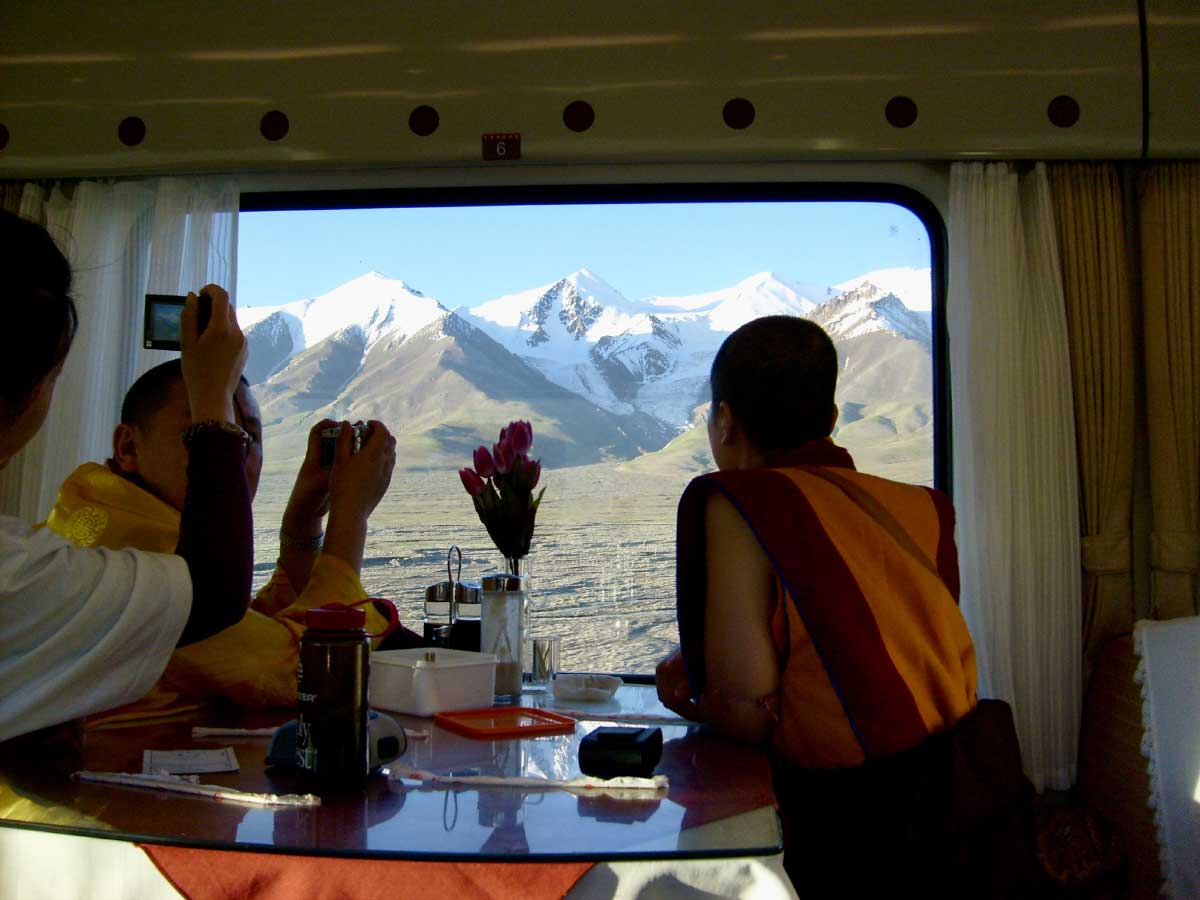
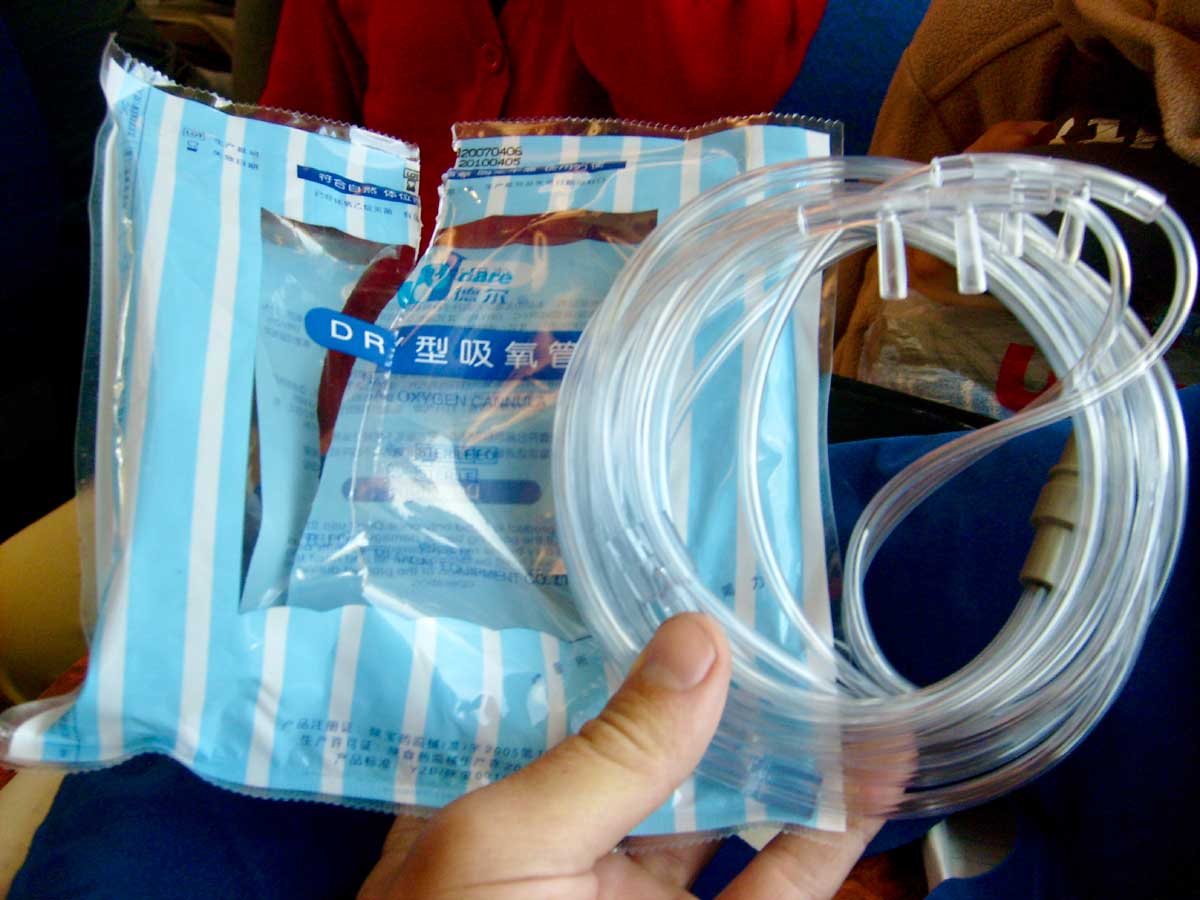
What I discovered surprised me. The train itself was remarkably modern. The first-class sleeper compartments were comfortable and quiet, and throughout the journey oxygen was supplied directly into the carriages. Individual oxygen outlets beside each bed allowed passengers to connect small nasal tubes if needed – something I had never encountered on a train before. Yet my personal highlight was not the engineering. It was the dining car. Large panoramic windows offered uninterrupted views across the Tibetan Plateau while passengers relaxed over meals, exchanged stories and watched one of the most extraordinary landscapes on Earth slowly unfold outside. Sitting there with a cold beer in hand while endless grasslands, distant mountains and nomadic camps drifted past remains one of my strongest memories of the journey.
Nearly two decades later, I still believe the Tibet train is one of the most underrated travel experiences in Asia. And after leading motorcycle tours across Tibet for many years, I have become convinced of something else:
One of the best ways to end a Tibet motorcycle adventure is not by boarding a plane. It is by taking the train.
Why Ending a Tibet Motorcycle Tour by Train Makes Perfect Sense
Of course, nearly twenty years have passed since my first journey on the Tibet train. The carriages are no longer brand new. The excitement surrounding the opening of the railway has faded, and some signs of age are visible today. The train is no longer the futuristic showcase it appeared to be in 2007. Yet strangely enough, that is not what makes the experience special. Nobody boards the Tibet train because of luxury. People board it because of where it goes.
After days or even weeks spent riding across Tibet, reaching destinations such as Everest Base Camp, Mount Kailash or the vast landscapes of the Tibetan Plateau, many travellers naturally book the next available flight and leave. Personally, I think that is a missed opportunity. A motorcycle journey across Tibet is not a destination-focused trip. It is an experience that unfolds slowly.
The changing landscapes, the altitude, the encounters with Tibetan culture and the sheer scale of the plateau all take time to absorb.
The Tibet train offers something increasingly rare in modern travel: the opportunity to slow down. Instead of rushing from hotel to airport to departure gate, the journey continues. The motorcycle adventure may be over, but Tibet itself remains outside your window.
After years of travelling through Tibet, I have come to appreciate this contrast. Only days earlier, the same landscapes were experienced from the saddle of a motorcycle, exposed to the wind, the weather and the immense scale of the plateau. Aboard the train, there is finally time to sit back, watch the scenery unfold and absorb everything that has happened along the way.
Across the Roof of the World
One of the greatest pleasures of travelling aboard the Tibet train is that there is surprisingly little to do. No mountain roads to navigate. No schedules to keep. No weather-related concerns to think about. For perhaps the first time since arriving in Tibet, there is nothing more important than looking out of the window. And there is plenty to see:
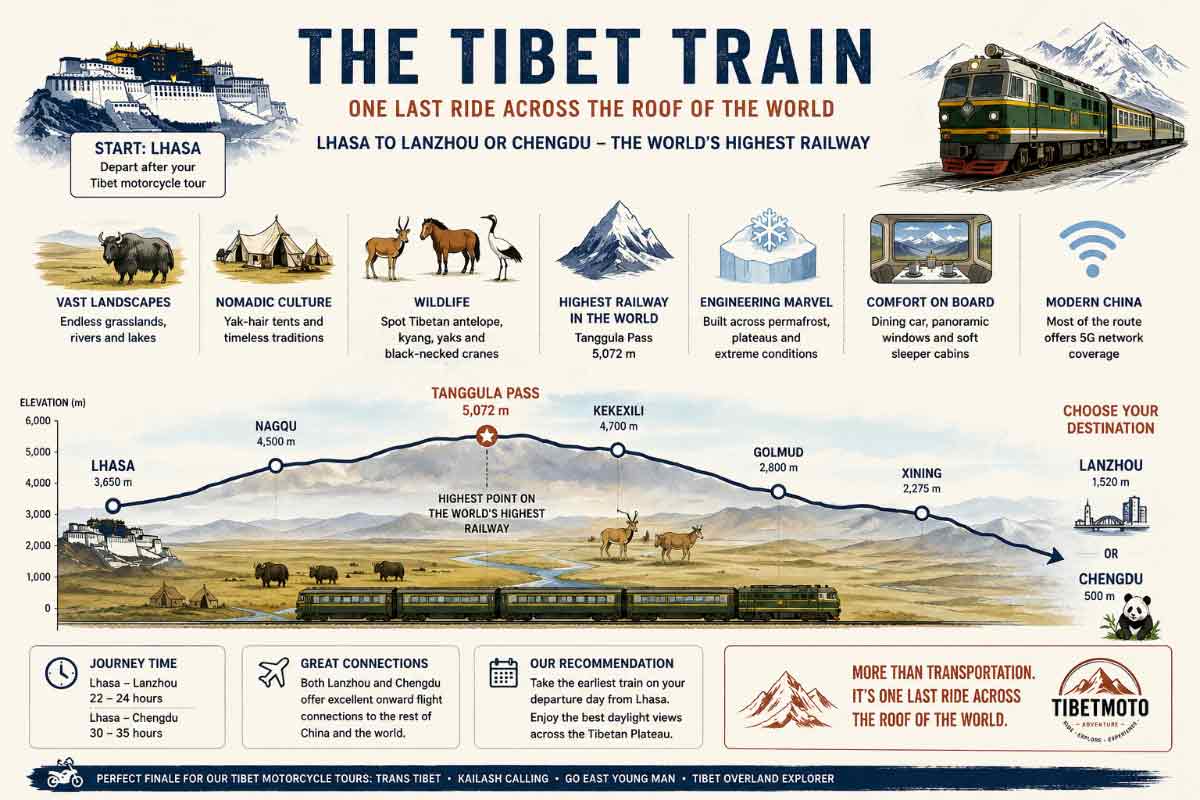
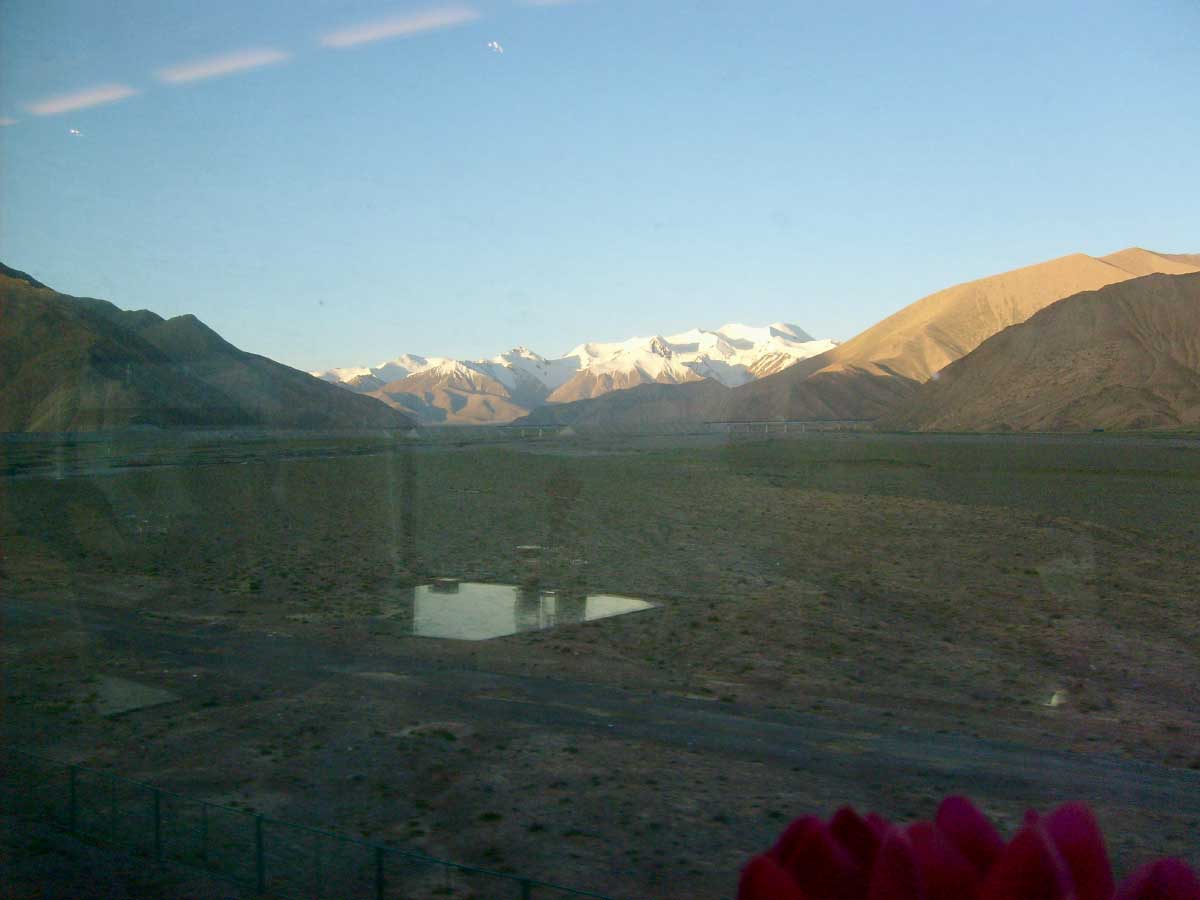
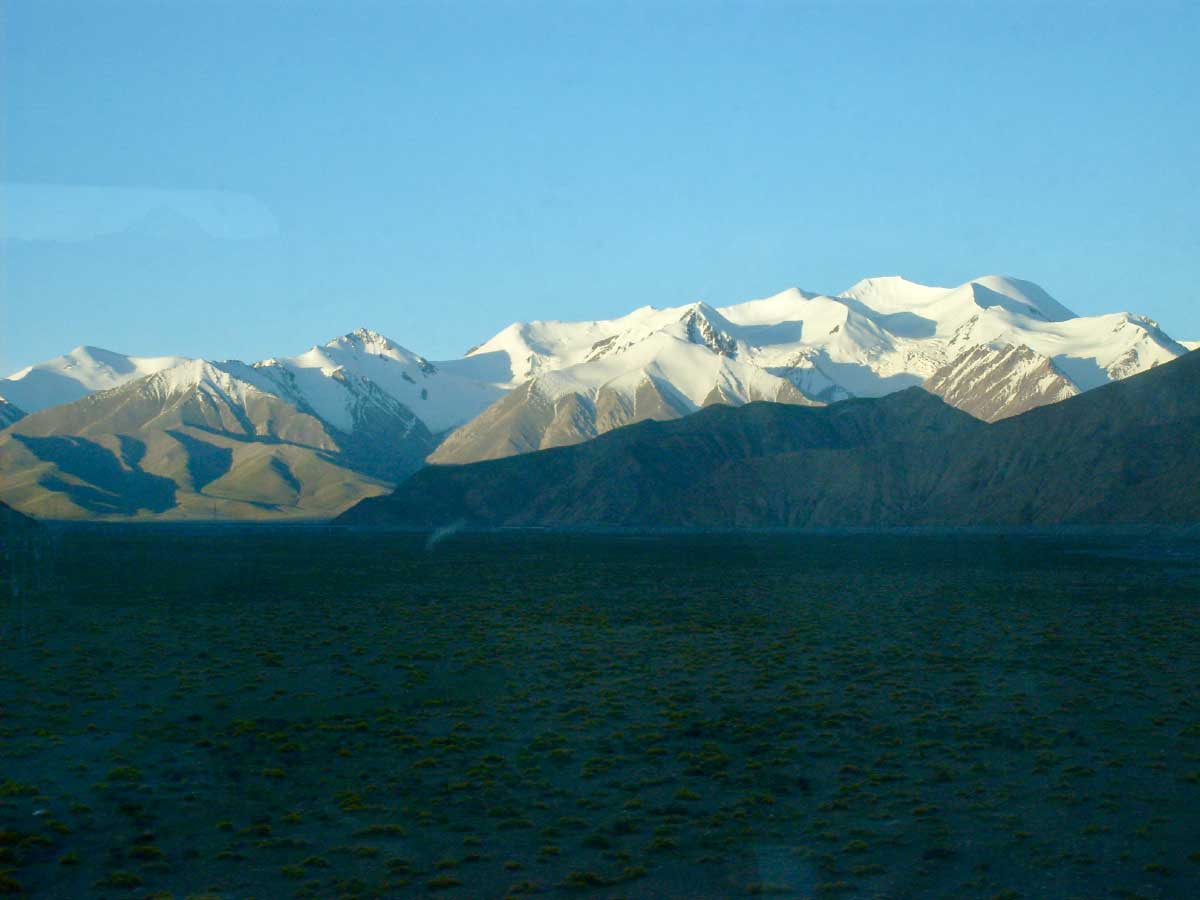
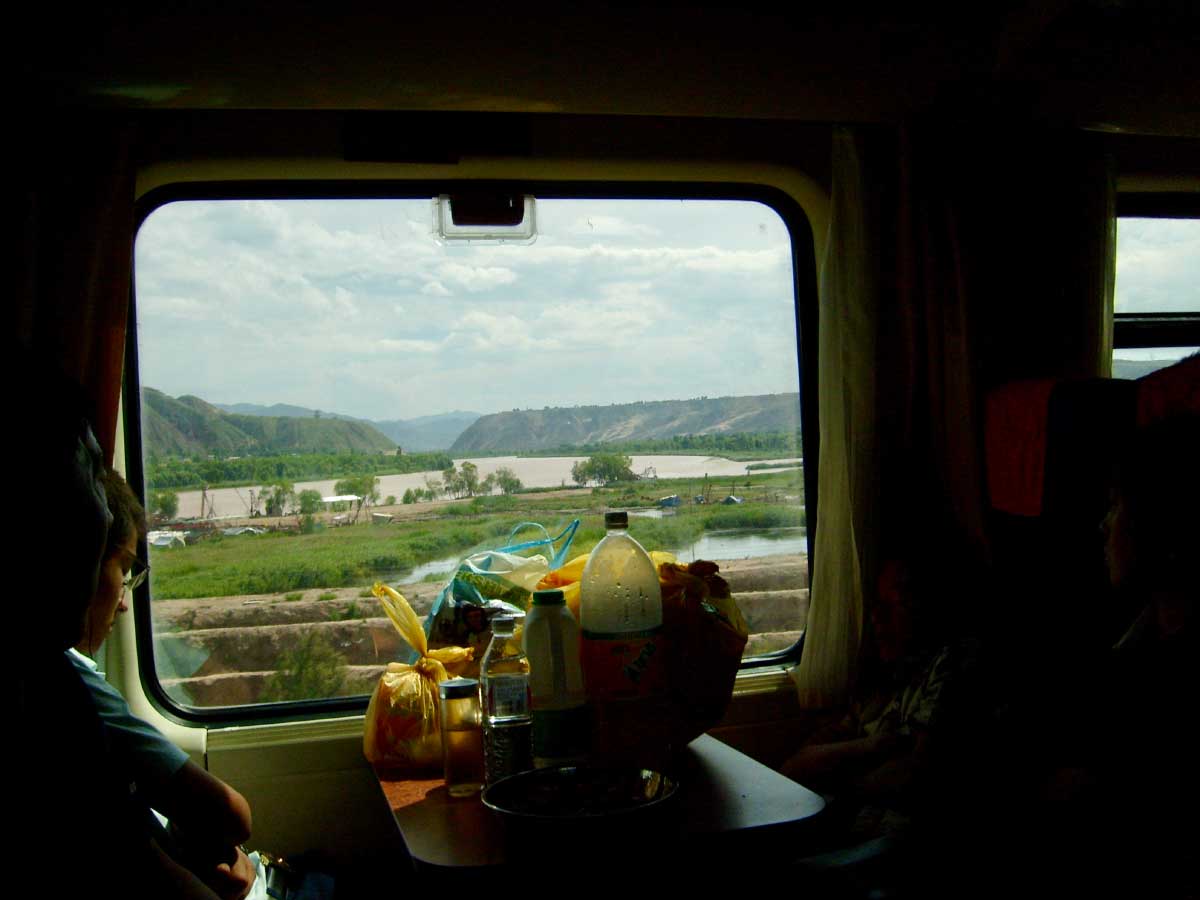
Soon after leaving Lhasa, the railway begins crossing some of the most remote landscapes on Earth. Vast grasslands stretch toward distant mountain ranges, rivers wind through broad valleys and the enormous skies of the Tibetan Plateau seem to extend forever. In many places, there are no villages, no roads and no visible signs of modern life for hours at a time. Instead, the scenery belongs to nomads, wildlife and the immense open spaces that have defined Tibet for centuries. As the train leaves Lhasa in the morning, the city gradually disappears behind the mountains. Hour by hour, the landscapes become larger and more remote. Vast grasslands stretch toward distant horizons, interrupted only by streams, small lakes and the occasional black yak-hair tent of a nomadic family.
Herds of yaks graze across the plateau much as they have for centuries, while sharp-eyed travellers may spot Tibetan antelope, black-necked cranes or groups of kyang — the wild horses of the Tibetan Plateau — moving freely across the open landscape. In many places, there are no towns, no highways and no visible signs of modern life for hours at a time. Instead, the view belongs to the immense scale of the plateau, its wildlife and the nomadic cultures that continue to call this remote region home.
The train itself climbs to astonishing altitudes. Several sections of the railway run well above 4,500 metres, while the Tanggula Pass reaches more than 5,000 metres above sea level, making it the highest railway pass in the world. And yet inside the train, the experience remains remarkably relaxed. Passengers read books, exchange stories, enjoy meals or simply sit quietly by the window while the Tibetan Plateau unfolds outside.
There is something almost nostalgic about the experience. Outside the window, nomads, yaks and endless plateau landscapes create the impression of a world largely unchanged for centuries. Yet inside the train, modern China is never far away. Much of the route enjoys surprisingly good 5G coverage, creating a curious contrast between one of the world’s most ancient landscapes and one of its most modern railway systems.
In an age of high-speed flights and instant connections, the Tibet train still rewards slow travel. It allows travellers to watch the landscape change gradually, to appreciate the enormous scale of Tibet and to reflect on everything they have experienced during their journey. For riders returning from Everest Base Camp, Mount Kailash or a motorcycle expedition across Tibet, this slower rhythm often feels exactly right.
The adventure may be ending, but the journey itself is not quite over yet.
More Than Transportation
Perhaps that is ultimately what makes the Tibet train so special: It is not the fastest way to leave Tibet. It is not the most luxurious train in Asia. And after nearly two decades of service, it is certainly no longer the brand-new engineering marvel that first attracted worldwide attention when I boarded it in 2007. Yet none of that really matters.
The true value of the Tibet train lies elsewhere. It lies in the opportunity to spend a little more time with Tibet. A little more time watching the landscapes pass by. A little more time reflecting on the roads travelled, the monasteries visited, the conversations shared and the memories created along the way.
Motorcycle journeys through Tibet tend to leave a lasting impression. Riders often remember the roads, the mountain passes and the destinations. But they also remember moments in between: a cup of tea in a remote village, the sight of prayer flags fluttering on a high pass, the first glimpse of Everest or the endless openness of the Tibetan Plateau.
The Tibet train provides a rare chance to revisit those memories while the landscapes that inspired them still stretch beyond the window. Nearly twenty years after my own first journey aboard the train, that remains my strongest memory. Not a particular station. Not a timetable. Not even the engineering achievement itself. But sitting in the dining car, watching the Tibetan Plateau roll past beneath an endless sky and realizing that the journey was not quite over yet.
Ready to experience Tibet for yourself?
Explore our Tibet motorcycle tours, including the Trans Tibet Motorcycle Tour and Kailash Calling Motorcycle Tour, or contact our team for advice on how to combine your motorcycle adventure with one of the world’s most remarkable train journeys.
Which TibetMoto Tours Pair Perfectly with the Tibet Train?
The Tibet train can be added to almost any TibetMoto motorcycle journey ending in Lhasa and is particularly popular among riders who prefer to conclude their adventure at a slower pace. For many participants on our Trans Tibet Motorcycle Tour, the train offers the perfect finale after visiting highlights such as Everest Base Camp, Yamdrok Lake, Shigatse and the vast landscapes of Central Tibet. Instead of boarding a flight immediately after the tour, riders can continue their journey across the Tibetan Plateau while reflecting on everything they have experienced over the previous days.
The Tibet train is equally well suited to our Kailash Calling Motorcycle Tour. After riding through Western Tibet, visiting Mount Kailash, Lake Manasarovar, the ancient Kingdom of Guge and the Everest region, the train journey provides a gentle transition back to everyday life. Few places offer a better opportunity to process the experiences of the previous weeks than the quiet rhythm of the railway crossing the Roof of the World.
Participants on our Go East Young Man Himalayan Tour often find the train particularly rewarding. After starting in Shangri-La in Yunnan Province and following the endless curves, deep valleys and remote mountain roads of Eastern Tibet all the way to Everest Base Camp and Lhasa, the train offers one final opportunity to absorb the immense scale of the Tibetan Plateau before returning home.
The Tibet train also pairs perfectly with our Tibet Overland Explorer Tour. Beginning in Kathmandu and crossing the Himalaya into Tibet, the route combines Everest Base Camp with some of the most spectacular landscapes of the Tibetan Plateau before finishing in Lhasa. Continuing onward by train allows travellers to conclude the adventure at a slower pace while enjoying one last journey across the Roof of the World.
Frequently Asked Questions About the Tibet Train
Most travellers choose either Lanzhou or Chengdu as their destination. Depending on the train and schedule, the journey to Lanzhou typically takes around 22–24 hours, while Chengdu can usually be reached in approximately 30–35 hours.
If possible, we recommend taking one of the earlier departures from Lhasa. Leaving in the morning provides the best opportunity to experience the vast landscapes of the Tibetan Plateau during daylight hours and transforms the return journey into a memorable part of the adventure itself.
Both cities offer excellent onward flight connections. Lanzhou is reached more quickly, while Chengdu is often preferred by international travellers thanks to its large airport, comfortable hotels and numerous international flight options.
The Tibet train offers three classes: hard seat, hard sleeper and soft sleeper. For journeys of 22 to 35 hours, we strongly recommend booking a soft sleeper compartment.
Hard seats are the cheapest option but are generally unsuitable for such a long journey. Hard sleepers offer six berths per compartment and are considerably more crowded. Soft sleepers provide four-berth compartments with lockable doors, greater privacy and a significantly more comfortable travel experience.
Typical ticket prices from Lhasa are approximately:
- Soft sleeper: RMB 800–1,100 (USD 110–150)
- Hard sleeper: RMB 500–700 (USD 70–95)
- Hard seat: RMB 250–350 (USD 35–50)
Soft sleeper tickets are often sold out well in advance and may not always be available through standard online booking platforms. In practice, many international travellers obtain soft sleeper tickets through specialised ticket agencies, which usually charge an additional service fee. TibetMoto can assist riders with Tibet train reservations as part of their travel arrangements.
For most international travellers, soft sleeper compartments offer the most comfortable experience. Compartments usually accommodate four passengers and provide lockable doors, comfortable beds and greater privacy. Hard sleeper compartments are a more economical alternative but offer less privacy and can become considerably busier during peak travel periods.
Travel times depend on the destination. The journey from Lhasa to Lanzhou typically takes around 22–24 hours, while Chengdu is usually reached in approximately 30–35 hours. Exact schedules vary depending on the train service and season.
Yes. Because the railway crosses regions above 5,000 metres, the train is equipped with a pressurised oxygen system. Oxygen is supplied throughout the carriages, and individual oxygen outlets are available beside each berth if required.
The railway crosses some of the most remote landscapes on Earth. Depending on the route and time of day, passengers may see nomadic settlements, herds of yaks, Tibetan antelope, kyang (wild Tibetan horses), high mountain ranges, vast grasslands and the seemingly endless landscapes of the Tibetan Plateau.
Absolutely. Many TibetMoto riders choose the train specifically because it provides a relaxed and scenic conclusion to their Tibet motorcycle adventure. After riding to destinations such as Everest Base Camp or Mount Kailash, the train offers an opportunity to experience the Tibetan Plateau from a completely different perspective.
If time is limited, flying is naturally faster. However, travellers with an extra day or two often consider the Tibet train one of the highlights of their entire Tibet journey. Rather than rushing directly to the airport, the train allows the adventure to continue across the world’s highest railway while enjoying some of the finest scenery in Tibet.